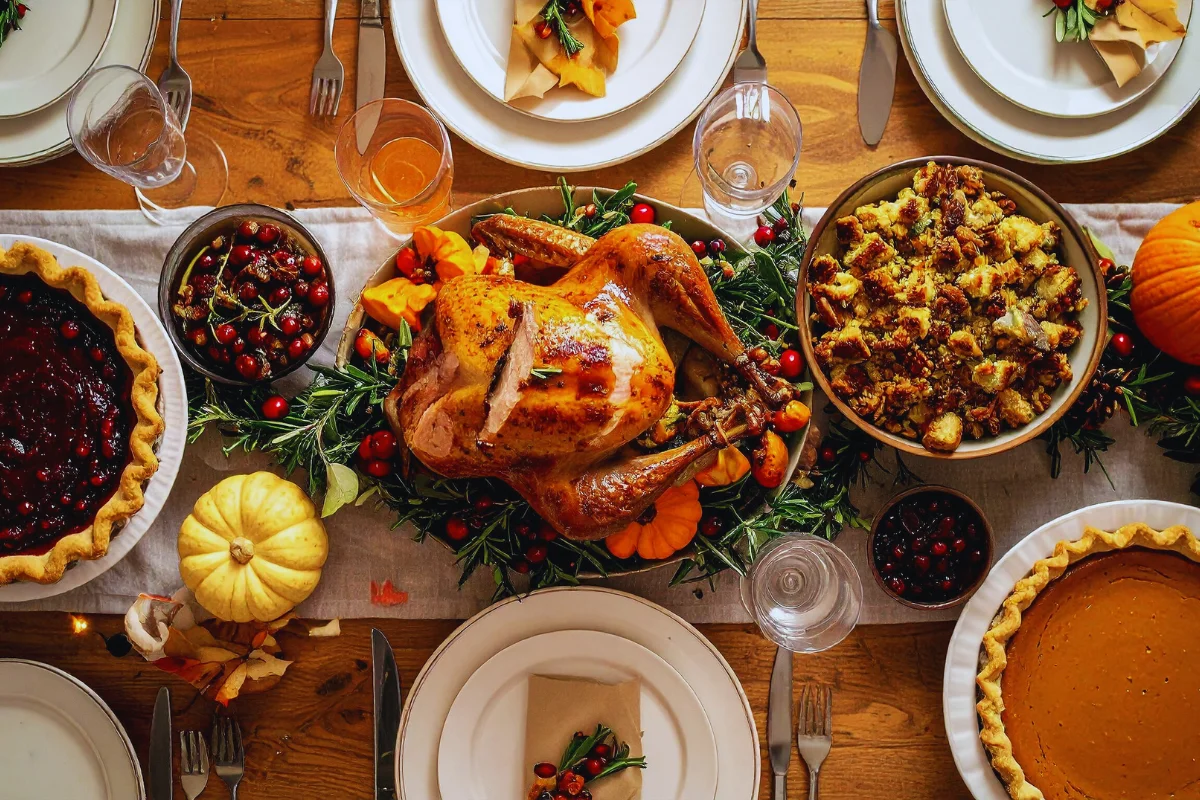


Thanksgiving is supposed to feel warm, joyful, and restful. But often it ends up being a marathon: rushing from event to event, sweating over a stove, and barely catching a moment to breathe.
I want to walk you through a realistic way to plan the day so that, yes, you attend those must-see moments, yes, you cook something good, and yes, you actually relax.
Table of Contents
Why “balance” matters (and why most plans fail)
I used to go into Thanksgiving with grand plans: attend the parade, visit three friends’ dinners, host my own feast, and still have time to nap. That never worked. Because every slot chews up more time than you think: travel, parking, chatting. Cooking always takes longer. Guests arrive late. You end up exhausted and frazzled.
What I learned: You need a realistic guardrail. A plan that allows margins, buffers, and (this is key) enforced downtime. If you don’t, you’ll trade “relaxing day” for “crazy day with leftovers.”
So the goal: a schedule where attendance, cooking, and rest coexist. Let’s break it down.
Step 1: Choose your must-attend events in advance
You probably have more invitations, events, or parade plans than you can fully attend. That’s okay, you have to pick what matters most.
- Decide what you really want: Is it the Thanksgiving parade? A friend’s dinner? A charity event in the morning? A family tradition?
- Use that as your anchor. Build your day around that.
- Decline or partially commit to less critical ones. It’s okay to swing by later, or just send your regrets.
If the parade matters, block those hours first. If a late dinner is your priority, you may skip a morning event. Once your anchors are firm, you can fill in around them.
Also, while planning, peek at local guides that help people plan events. For example, there’s a useful budget-friendly Thanksgiving meal plan on Thanksgiving Parade that also links to guides on where to dine out. (Check out our “Thanksgiving on a Budget: 50 Meal Plan” page.)
Step 2: Work backwards from dinner time to set your cooking timeline
Once you know when dinner or your main meal must be ready, you can map backwards every cooking task. Here’s a simple way:
- Dinner time target (for example, 5:00 PM)
- List all cooking tasks: brining (if any), turkey cooking/roasting, side dishes, baking, desserts, reheating, plating.
- Estimate how long each takes (with buffer)
- Put tasks into time slots, starting earlier in the day or even the night before
Example (for a 5 PM dinner):
- 8:00 AM – prep turkey (season, brine, get ready to roast)
- 9:00 AM – turkey goes in the oven
- 11:00 AM – start side dishes (yams, veggies, etc.)
- 1:00 PM – dessert prep or baking
- 3:30 PM – reheat, plate, finishing touches
- 4:30–5:00 PM – relax, set table, welcome guests
You’ll want buffer time for oven delays, dish mishaps, or just catching your breath. Always leave 30 minutes of slack around major transitions.
Also, if some components can be done a day or two before, desserts, chopping, and sauces ahead, that lightens your load on Thanksgiving day.
Step 3: Slot in your events, breaks, and wiggle room
With your cooking timeline set, insert the events you committed to and carve out breaks. You want breathing space, not back-to-back rush.
Here’s what your day might look like (sample):
- 7:00 AM – wake up, coffee, quick review of the day
- 7:30 AM – light prep (e.g. vegetables, desserts, mise en place)
- 8:30 AM – leave for morning event/parade
- 10:30 AM – return home, check on turkey/progress
- 11:00 AM – mid-day rest / light snack
- 12:00 PM – side dishes stage 1
- 1:30 PM – break, short walk or reading
- 2:00 PM – finish dishes, reheat, plating
- 3:30 PM – break, set table, final touches
- 5:00 PM – dinner time
- 6:30 PM – cleanup, digest, maybe dessert with coffee
- 8:00 PM – optional visiting, relaxing, nap
You’ll notice the key: breaks between tasks. Without them, the schedule collapses. Maybe 15 minutes after cooking, you just sit and sip coffee. Maybe 30 minutes before guests arrive, check messages or zone out. Guard those.
Be realistic about travel or transition times. If you visit a friend from 8:30 to 10:30, maybe give 30 minutes travel overhead each way. That means 8:00–11:00 is your block, really.

If an event ends later, you may start cooking earlier or shift nonessential tasks to the day before.
Step 4: Tips to lighten the load (so you can rest)
You don’t have to do it all yourself. Here are tricks I’ve used (and still tweak):
- Potluck/guest contributions: Ask each guest to bring a side, dessert, or salad. You handle the turkey and a few staples.
- Semi-homemade shortcuts: A pre-made sauce, a store-bought pie crust, or a good boxed side can save one or two hours.
- Prep ahead: Chop vegetables, measure spices, bake desserts a day or two before.
- Double-duty recipes: Recipes that reheat well or can serve as lunch leftovers.
- Delegate tasks: Washing dishes, garnishing, serving, and clearing. If someone is willing, give them something.
- Keep parts simple: Don’t overcomplicate every dish. Use dishes with fewer steps.
- Where to dine out: If your schedule is tight, it might make sense to eat out for part of it. ThanksgivingParade offers a guide on where to eat out on Thanksgiving, which helps when cooking seems to overwhelm you.
Using these can free 1–2 hours (or more). That’s precious time you can reclaim.
Step 5: Mental rest and realistic expectations
This day will carry emotional weight, family dynamics, and surprises. If you go in expecting perfection, you’ll feel off when things stray. Instead:
- Accept that not everything will go exactly as planned
- If a dish burns a little, nobody will die, serve it anyway or improvise
- The goal is connection, warmth, gratitude, not flawless cooking.
- Fit in a few “you” mins: five minutes to step outside, breathe, check your phone.
- When the guests arrive, your presence (not a perfect meal) is the gift.
If you budget your day with that mindset, your tensions soften.
Full sample schedule (for reference)
Here’s a more fleshed-out sample for a 5:00 PM dinner, assuming you attend a morning event:
| Time | Activity |
| 6:30 AM | Wake up, coffee, review the plan |
| 7:00 AM | Do advance tasks: chop, measure, thaw |
| 8:00 AM | Travel/attend parade or event |
| 10:30 AM | Return, check turkey, rest 15 min |
| 11:00 AM | Start side dishes |
| 12:30 PM | Light lunch/break |
| 1:00 PM | Prepare dessert/baking if needed |
| 2:00 PM | Reheat, final cooking, garnish |
| 3:00 PM | Break, set the table, freshen up |
| 5:00 PM | Sit for dinner |
| 6:30 PM | Clear up, digest, drink coffee/tea |
| 7:30 PM+ | Visit, rest, conversation, leftovers |
You’ll shift this depending on your events, meal time, and how many guests you serve. But always aim to anchor around one big event and one big meal, leaving the rest flexible.
How does this help you actually relax
When you:
- Pick your musts early
- Build a cooking timeline.
- Insert buffers and breaks.
- Lighten the load through prep, help, or outside dining.
You end up with gaps. Those gaps let you breathe. They let you look up once, see family, laugh, and take a photo. You avoid being chained to the oven from dawn to dusk.
You might find you even finish early, giving you post-dinner downtime: reading, games, or a walk. That feels like a win.
Bringing it together
Thanksgiving should be joyful, not a stress relay. Use a two-step approach: pick core events, build cooking backwards, insert breaks, and then give yourself grace.
If you find your schedule too tight, lean on helpers or dine out (use the “where to eat out on Thanksgiving” guide above). If you’re budgeting, glance at the “Thanksgiving on a Budget: 50 Meal Plan” page for ideas to simplify and save time (and money).
In doing this, you’ll not only host or attend, but you’ll also actually rest. You’ll taste every dish, hear the laughter, steal a quiet moment, and feel part of it, not worn out by it.